
Intelligent three-chuck processing
The chucks move forwards or backwards in a coordinated sequence to support the changing production condition and reduce unnecessary handling.

Bodor N Series | Intelligent three-chuck tube laser
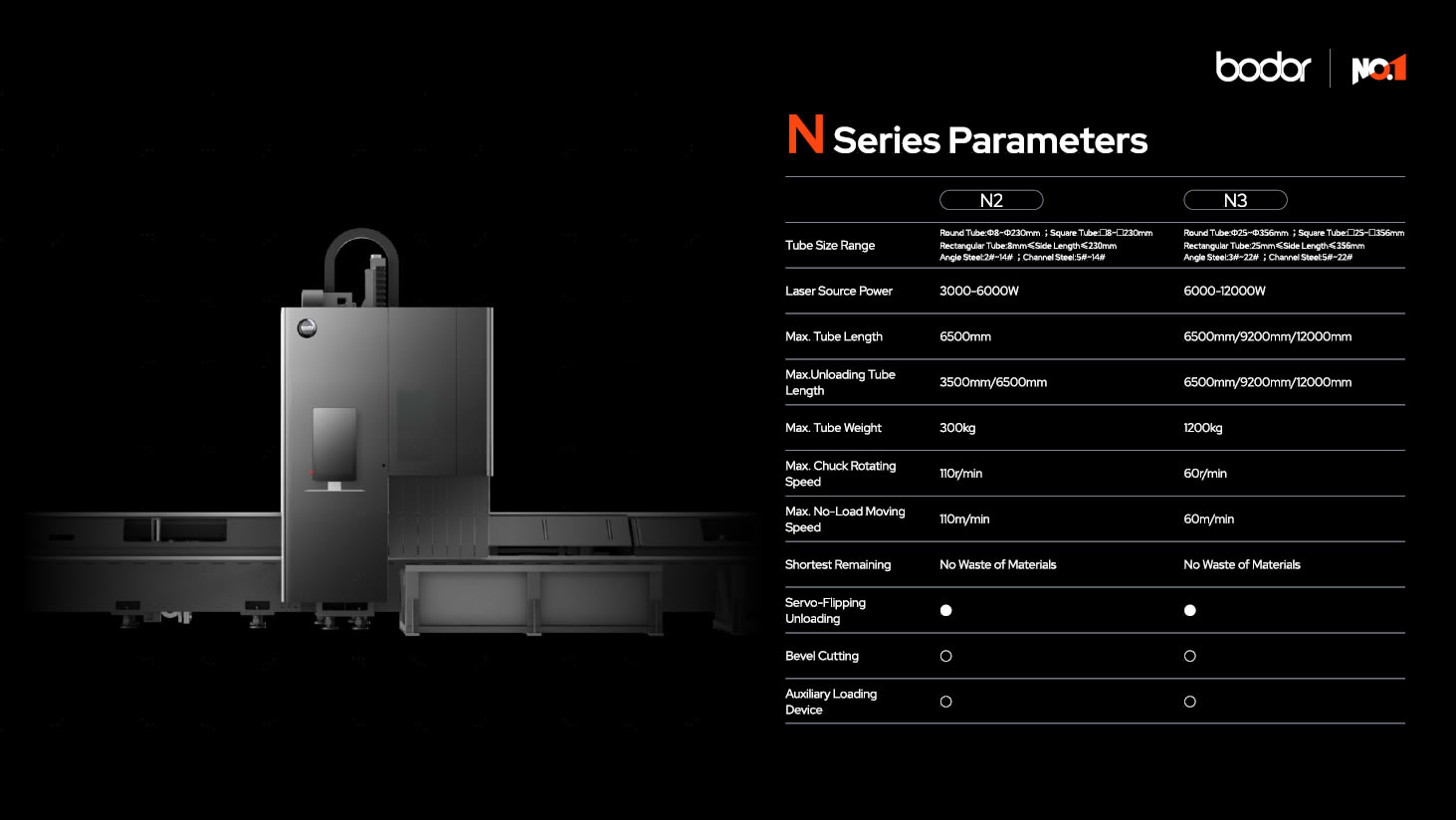
A high-performance tube laser designed around intelligent three-chuck processing, zero-tail cutting and stable handling of long or heavy tube. World Machinery supports UK manufacturers with application review, demonstrations, installation, operator training and long-term service.
Tube range, laser power, loading, bevel processing, seam recognition and achievable output depend on the selected configuration, material and application. Confirm all details in a current written World Machinery quotation.

Stable | efficient | versatile
The N Series coordinates three movable chucks so the machine can adapt its clamping and transfer sequence to the workpiece and cutting condition. The through-hole third chuck adds support for long and heavy tube, while the overall process is organised around efficient loading, complete cutting and controlled unloading.
The chucks move forwards or backwards in a coordinated sequence to support the changing production condition and reduce unnecessary handling.
When the remaining workpiece becomes too short, the system can switch to reverse cutting to reduce unusable tube remnants.
Loading, cutting and unloading are coordinated as one production route rather than isolated handling stages.
Full-tube processing
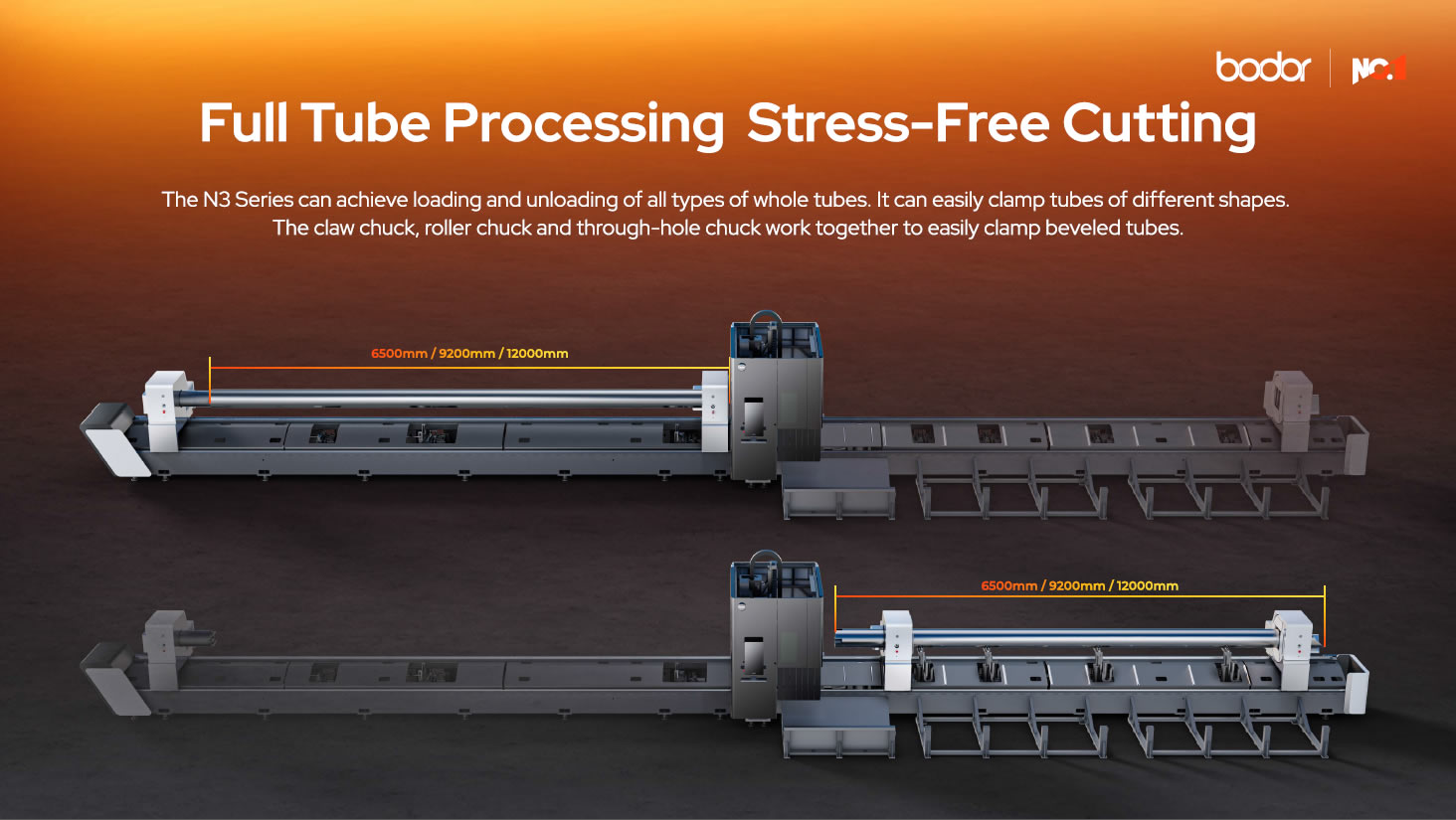
Bodor describes the N Series as combining loading, cutting and unloading through a bidirectional workflow. The final cycle time depends on tube geometry, length, wall thickness, pierce count, part nesting, laser power, optional loading and the required finished quality.
The coordinated chuck system positions and supports the tube for the programmed cutting sequence.
Bidirectional processing helps the line continue across the complete tube and supports the zero-tail strategy.
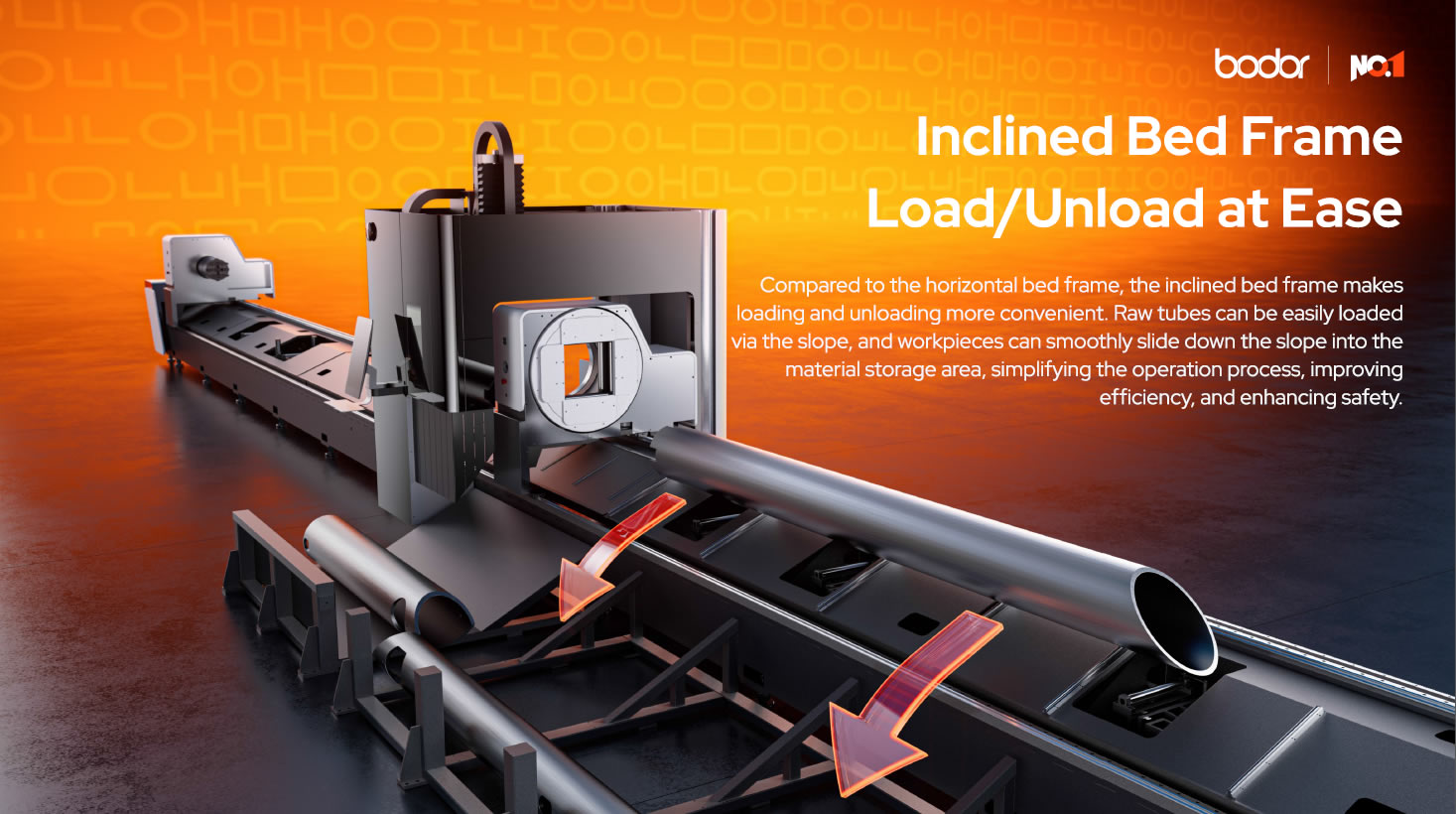
The ramped bed and unloading-side support help move completed workpieces out of the active processing area.
Stable workpiece support
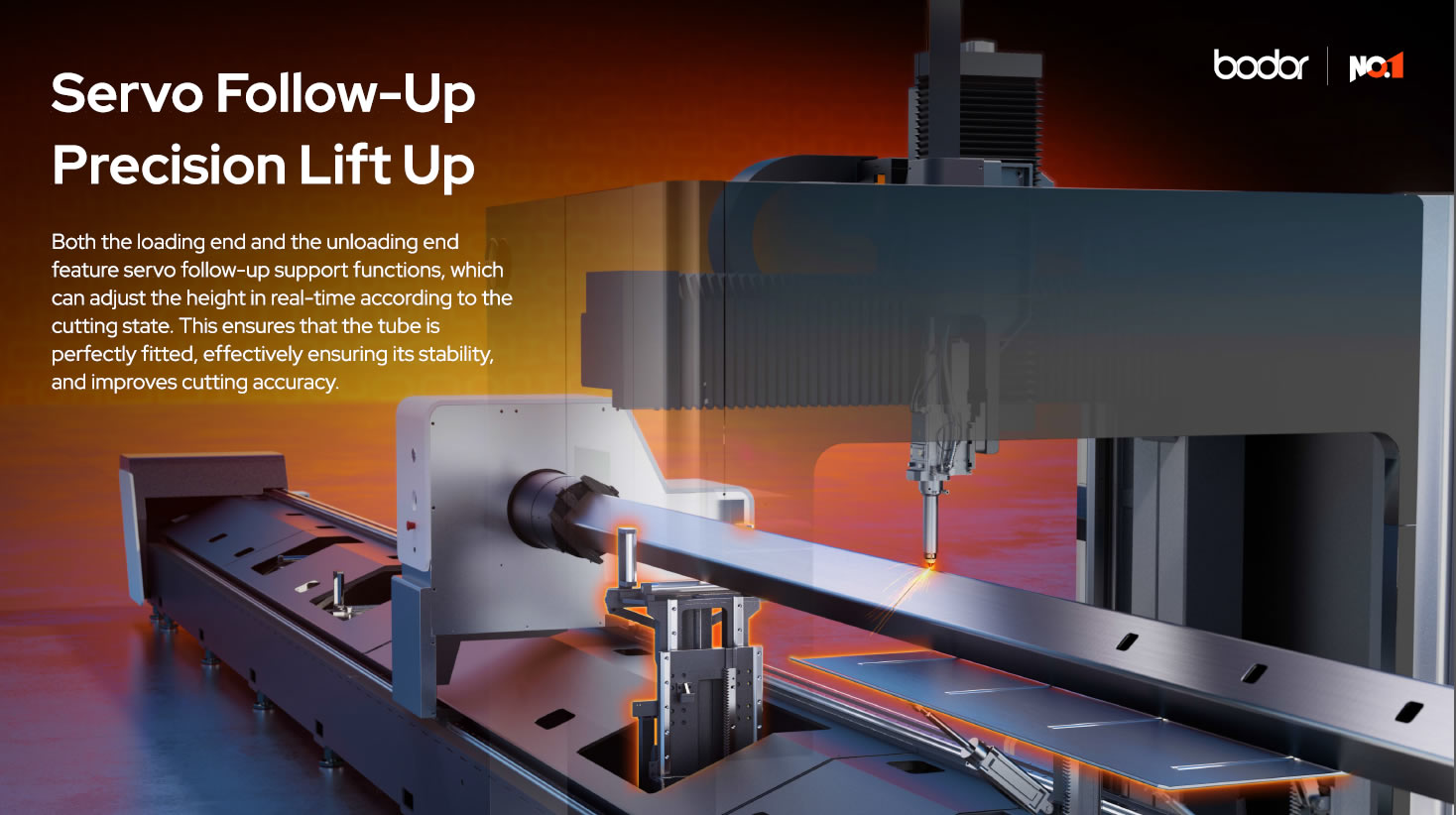
A supporting roller in the loading zone and a follow-up retainer plate in the unloading zone are intended to stabilise the workpiece during high-speed processing. The ramped bed allows parts to slide during unloading, helping reduce handling time and improve operator safety.
Supports the incoming workpiece and helps control deflection before the active cutting zone.
A retainer plate follows the workpiece as it leaves the processing zone, helping maintain stability.
The sloped structure is intended to let cut workpieces move out smoothly and reduce manual intervention.
Material utilisation and throughput
Zero-tail cutting is central to the N Series proposition. By changing the chuck sequence and reversing the cutting direction when required, the system is designed to use more of the tube. Actual saving depends on chuck clearance, part length, nesting, tube profile and the selected machine configuration.
Material-utilisation claims depend on tube length, geometry, chuck clearance, part nesting and the full machine configuration. Representative production trials are recommended.
Advanced options and production functions
Optional functions should be selected from actual production requirements. World Machinery can review tube profiles, weld seams, bevels, loading frequency, batch sizes and downstream welding or assembly before the final quotation.
 Optional process
Prepare suitable tube ends and features for assembly or welding, subject to the selected bevel head, geometry and material.
 Camera intelligence
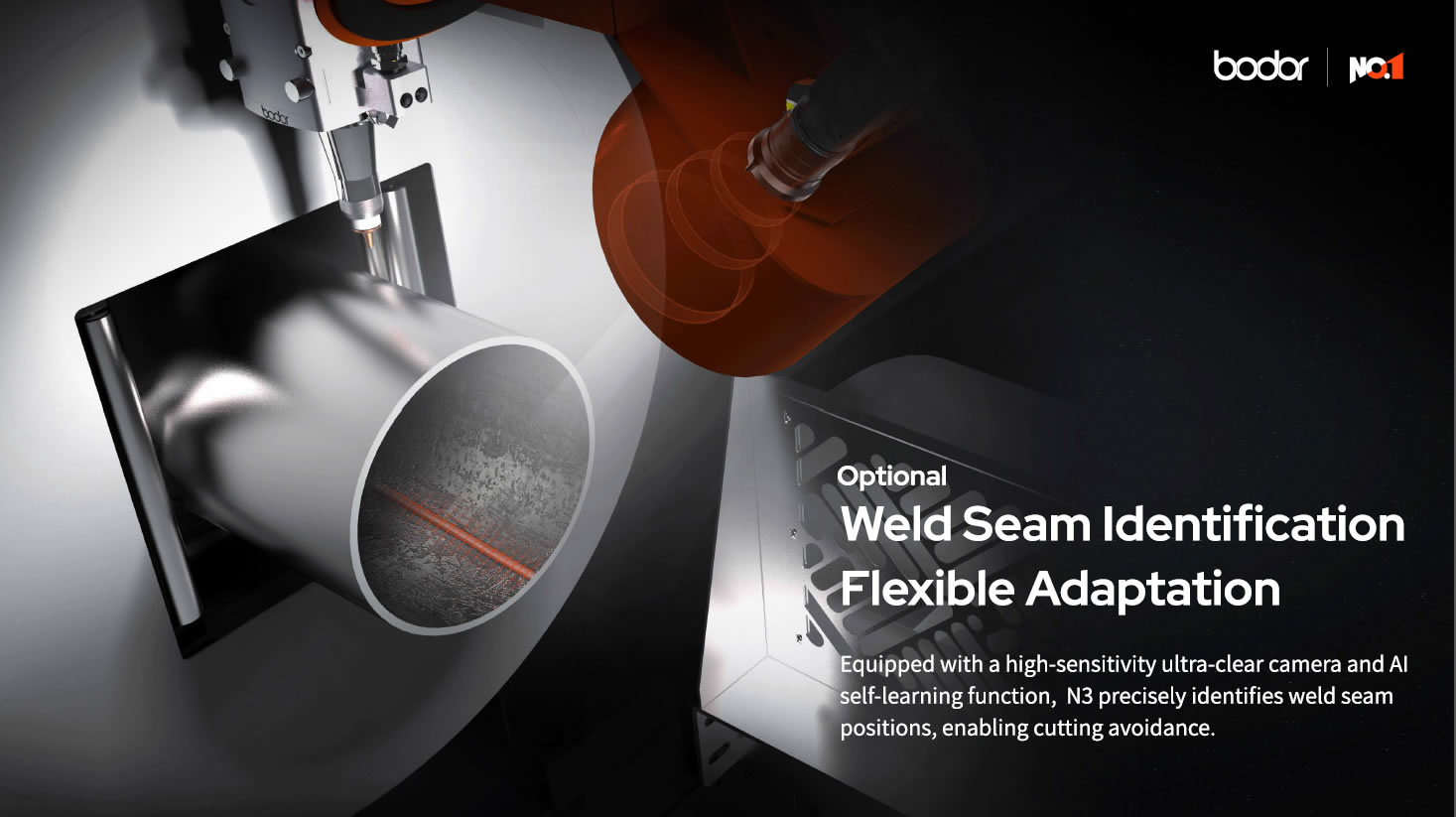
A high-precision camera and AI self-learning workflow are intended to identify and avoid the tube weld seam during cutting.
 Automation option
An optional high-speed loading system can reduce repetitive handling and help create a more continuous production cell.
 Application range
The three-chuck format is suited to manufacturers working with long, heavy or varied tubular components in structural and machinery applications.
 Specification planning
The final profile range, wall thickness, weight and loading arrangement must be matched to the actual N Series configuration offered.
Three-chuck production logic
The N Series is designed to change the way the final portion of tube is clamped and cut. This helps reduce the remnant left by a fixed chuck sequence, but the achievable result still depends on part geometry, chuck clearance, nesting and tube profile.
A fixed processing sequence can leave a longer unusable section because the final workpiece cannot be clamped and cut in the same way.
The coordinated chucks can change the processing direction when the workpiece becomes short, helping minimise the tail section.
The loading roller and unloading retainer are intended to support the tube on both sides of the cutting zone.
Construction, structural steel, machinery, agricultural equipment and general fabrication are among the applications identified for the N Series concept.
Specify around real tube production
A useful quotation begins with actual tube specifications and drawings. World Machinery can then review the required profile range, wall thickness, maximum weight and length, laser source, bevel needs, loading arrangement, extraction and factory layout.
List round, square, rectangular and special profiles together with minimum and maximum dimensions.
Confirm stock length, finished part length, tube mass, wall or flange thickness and the heaviest normal workpiece.
Share holes, slots, notches, mitres, bevels, weld-seam requirements and any marking or downstream welding needs.
Plan stock presentation, automatic loading, finished-part handling, extraction, services, floor space and maintenance access.
World Machinery UK support
A three-chuck tube laser is a complete production project. World Machinery can support application review, cutting trials, site planning, installation, commissioning, operator training, planned maintenance and qualifying finance options for UK manufacturers.
Review tube types, dimensions, features, weights, cycle targets and downstream fabrication before specification.
Use actual profiles and drawings to assess cut quality, bevels, seam recognition and material utilisation.
Coordinate delivery, services, extraction, commissioning and practical operator handover.
Protect uptime with UK technical support, planned maintenance and access to parts and consumables.
N Series questions
Final answers depend on the selected model, tube range, laser source, loading, bevel options and software. World Machinery can prepare a current written configuration for the project.
The N Series is a high-performance tube laser built around an intelligent three-chuck system. It is intended for long, heavy or varied tube production where material utilisation, complete tube processing and stable handling are important.
When the remaining workpiece becomes too short for the normal cutting sequence, the system can change the chuck positions and reverse the cutting direction. The aim is to reduce the final unusable tube remnant. The exact result depends on the profile, chuck clearance and part nesting.
The three chucks coordinate their movements during loading, cutting and unloading. The through-hole third chuck adds clamping support for long or heavy tube, helping stabilise the workpiece through the complete process.
An optional bevel-cutting configuration is described for angles up to plus or minus 45 degrees. Suitability depends on tube geometry, material, thickness, feature position and the selected head and software.
The optional camera-based function uses high-precision imaging and AI self-learning to identify the weld seam so the programmed features can avoid it where required. The actual workflow should be tested on representative tube stock.
Bodor presents automatic auxiliary loading as an optional feature. The correct loading system depends on tube shapes, dimensions, stock length, weight, batch size and factory layout.
Bodor identifies construction, structural steel and machinery as key applications. It can also suit general fabrication, agricultural equipment and other manufacturers working with repeat tubular components.
World Machinery can support application review, cutting trials, site preparation, installation, commissioning, operator training and ongoing UK service support. Finance options can also be discussed for eligible businesses.
Plan your N Series project
Send your tube profiles, dimensions, wall thickness, stock length, maximum weight and representative drawings. The World Machinery team can review a suitable N Series configuration and prepare current written figures.
Unit 5 Alveley Industrial Estate
Alveley, Bridgnorth, Shropshire WV15 6HG
Provide the key application details below and the World Machinery team will contact you about the next step.