Complex 3D contours
Process formed panels, stampings, shells and fabricated parts where a conventional two-dimensional cutting path is not enough.

Bodor Space Series u00b7 3D five-axis metal processing
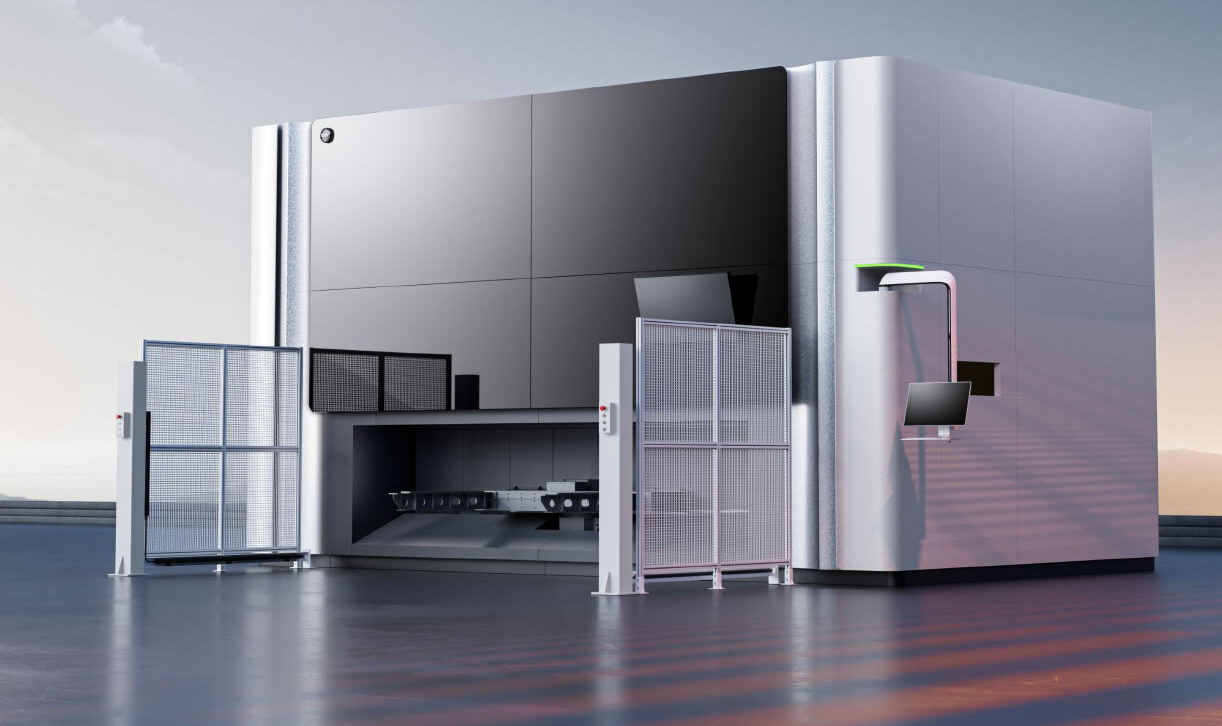
Cut complex formed metal parts with a coordinated five-axis laser platform designed around automotive, aerospace, mould, panel and construction-machinery applications. World Machinery supports UK manufacturers with application review, demonstrations, installation, operator training and long-term service.
Accuracy, table-change time, component size, laser power, programming package and production output depend on the final Space Series configuration and application. Confirm every figure in a current written World Machinery quotation.
Complex surfaces u00b7 coordinated motion u00b7 parallel handling
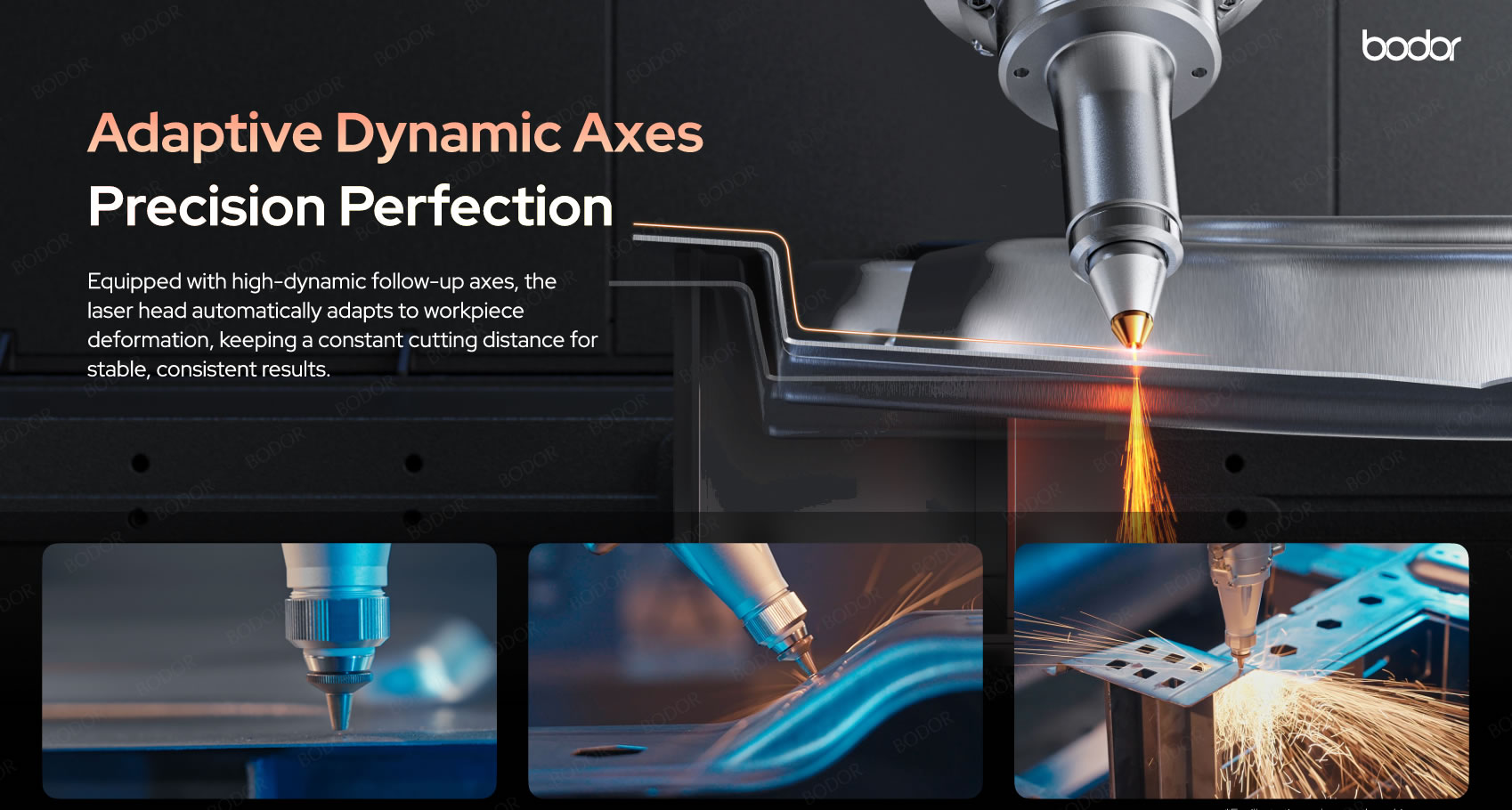
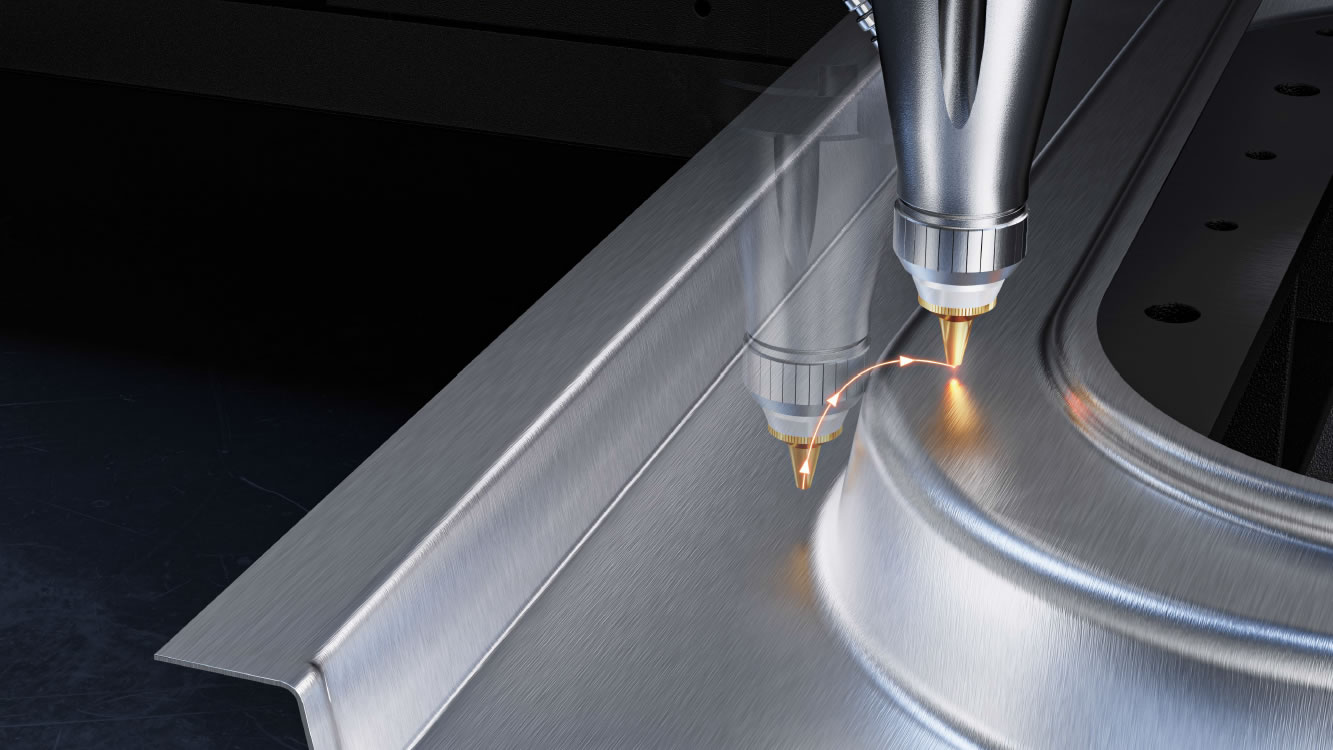
The Bodor Space Series is intended for components whose cut path changes across multiple faces, depths and angles. A five-axis cutting head, dual-station workholding concept and programming tools bring cutting, loading and unloading into one planned production cell.
Process formed panels, stampings, shells and fabricated parts where a conventional two-dimensional cutting path is not enough.
Prepare or unload one fixture while the other station is cutting, helping reduce non-productive changeover time.
Teach-in and offline programming options help turn approved toolpaths into repeatable production routines.
Prompt rotary tables
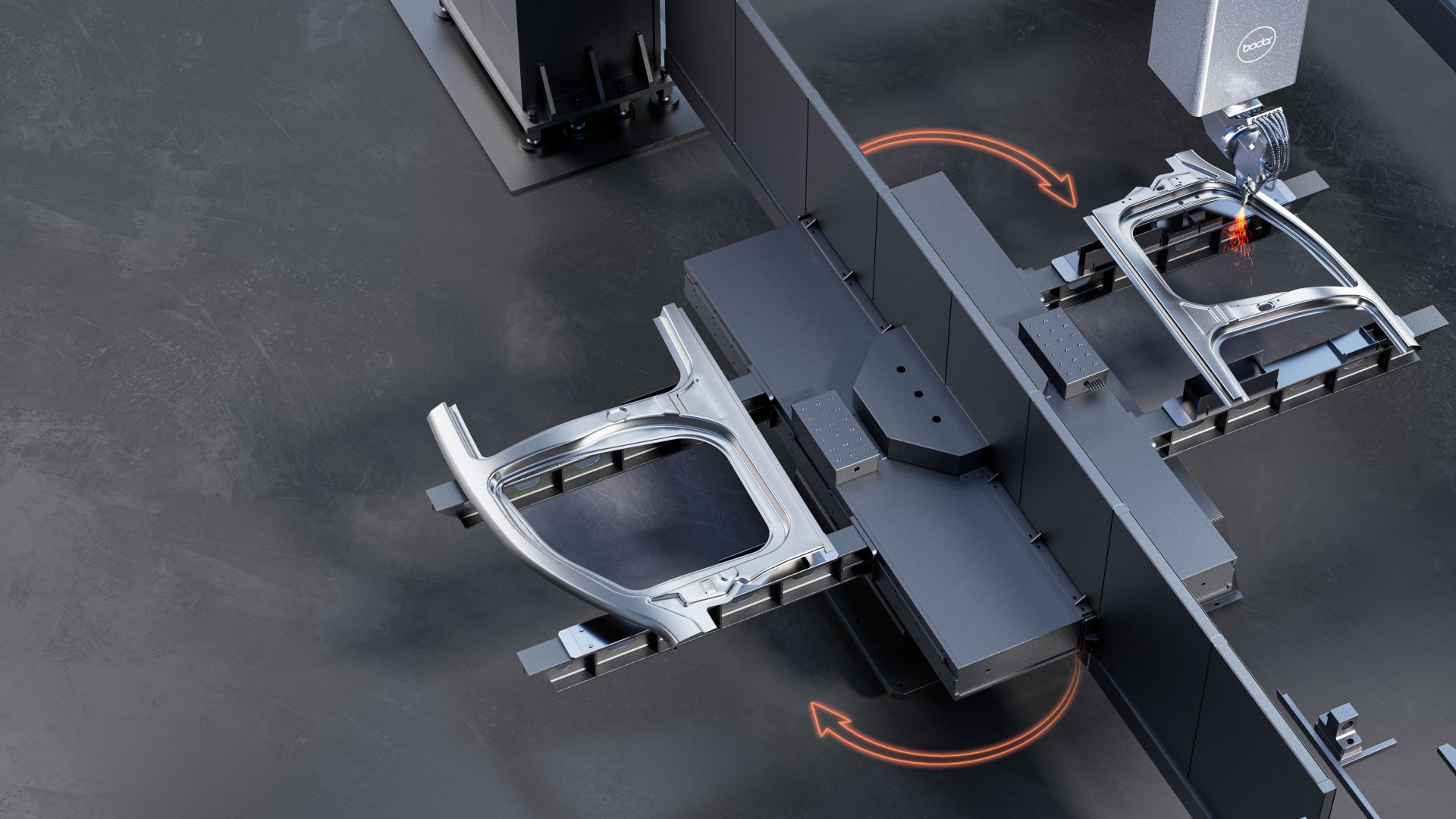
Bodor describes a dual-station rotary table with a 2.5-second changeover and ±15-arcsecond positioning reference. Cutting and loading or unloading can take place in parallel, reducing the idle time between parts and supporting a more continuous production rhythm.
Use application-specific workholding to locate the part and provide safe access to the programmed cutting path.
Coordinated head and table movement follows the programmed geometry across the required faces and contours.
The next part can be loaded or the completed part removed while processing continues on the opposite station.
The table changes station and the approved process can continue with less handling downtime between cycles.
Collision prevention u00b7 faster recovery
The Space Series is described with an anti-collision alarm that stops the laser head immediately when an impact is detected. Once the alarm condition has been cleared, the system is designed to return to its position automatically in one second, reducing the need for manual realignment.
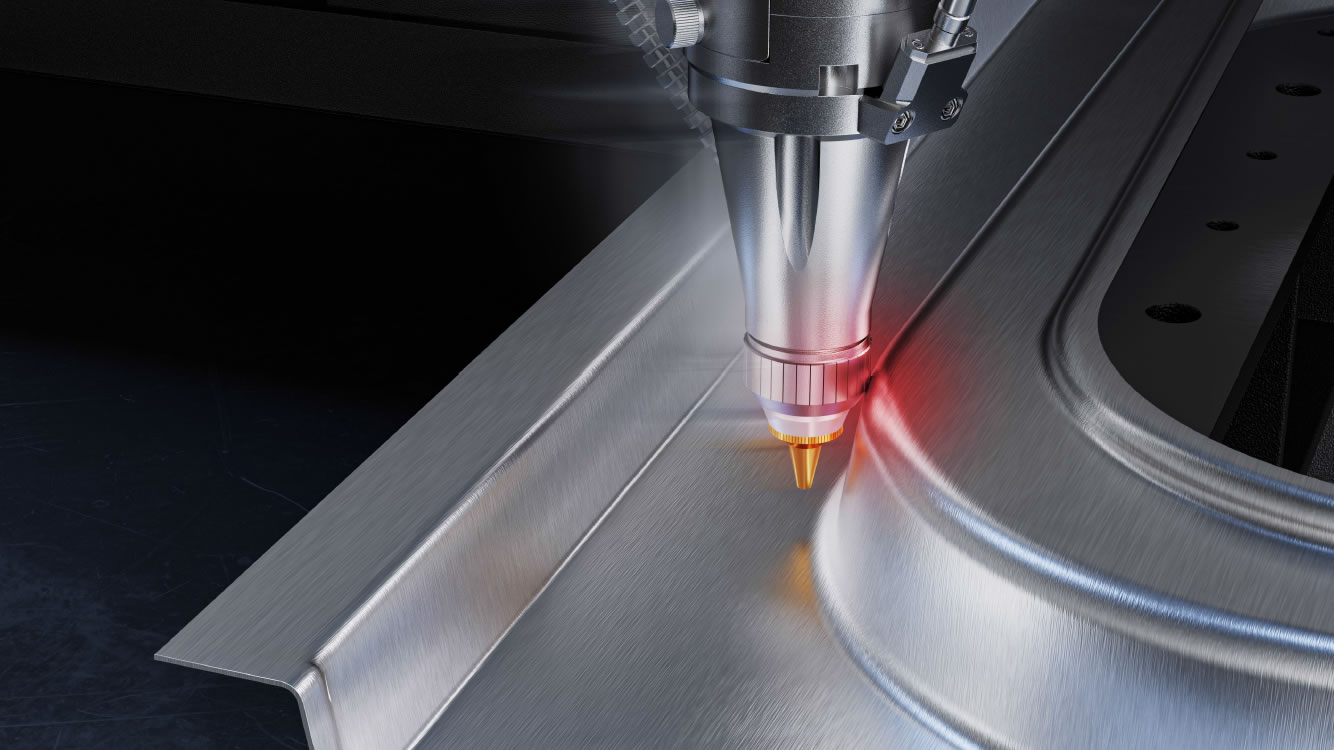
A detected impact triggers an immediate stop intended to limit damage to the cutting head and workpiece.
After the cause is cleared, the manufacturer describes a one-second automatic return to the previous position.
Collision protection reduces risk but does not replace correct fixtures, verified toolpaths, safe clearances, operator training or routine machine checks.
Integrated safety and cleaner processing
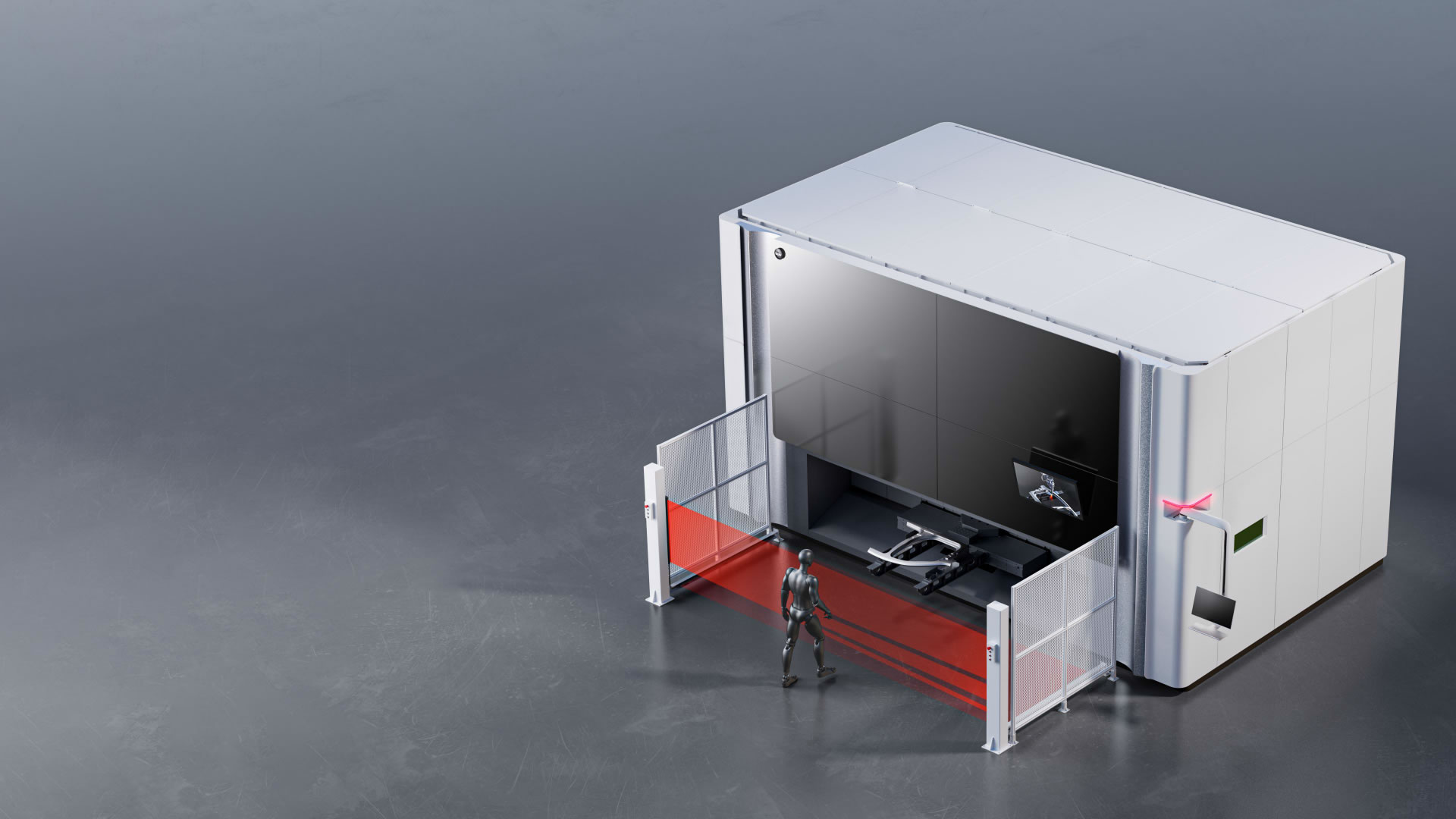
Bodor describes safety light curtains in both directions around the loading and unloading zone. Entry into the protected area stops table motion, and the safety logic is designed to prevent an unintended reset while the zone remains occupied. Larger extraction inlets and increased airflow are intended to capture smoke and dust close to the cutting source.
Protected access zones are intended to stop rotary-table movement when an operator enters the monitored area.
The table remains stopped while the safety condition is active, even if a reset is pressed inadvertently.
Airflow and extraction openings are arranged to remove smoke and dust close to the cutting process.
Final guarding, fixtures, access routes and extraction must be reviewed for the component and factory layout.
Production features
Space combines mechanical structure, intelligent recovery, safety controls and programming tools. The exact software, offline-programming package, fixtures and automation should be selected around the parts that need to be produced.
A rapid table change supports parallel cutting and loading or unloading.
The head is designed to stop immediately when a collision is detected.
The manufacturer describes a one-second automatic reset after the alarm is cleared.
Monitored loading zones help control access while the table is moving.
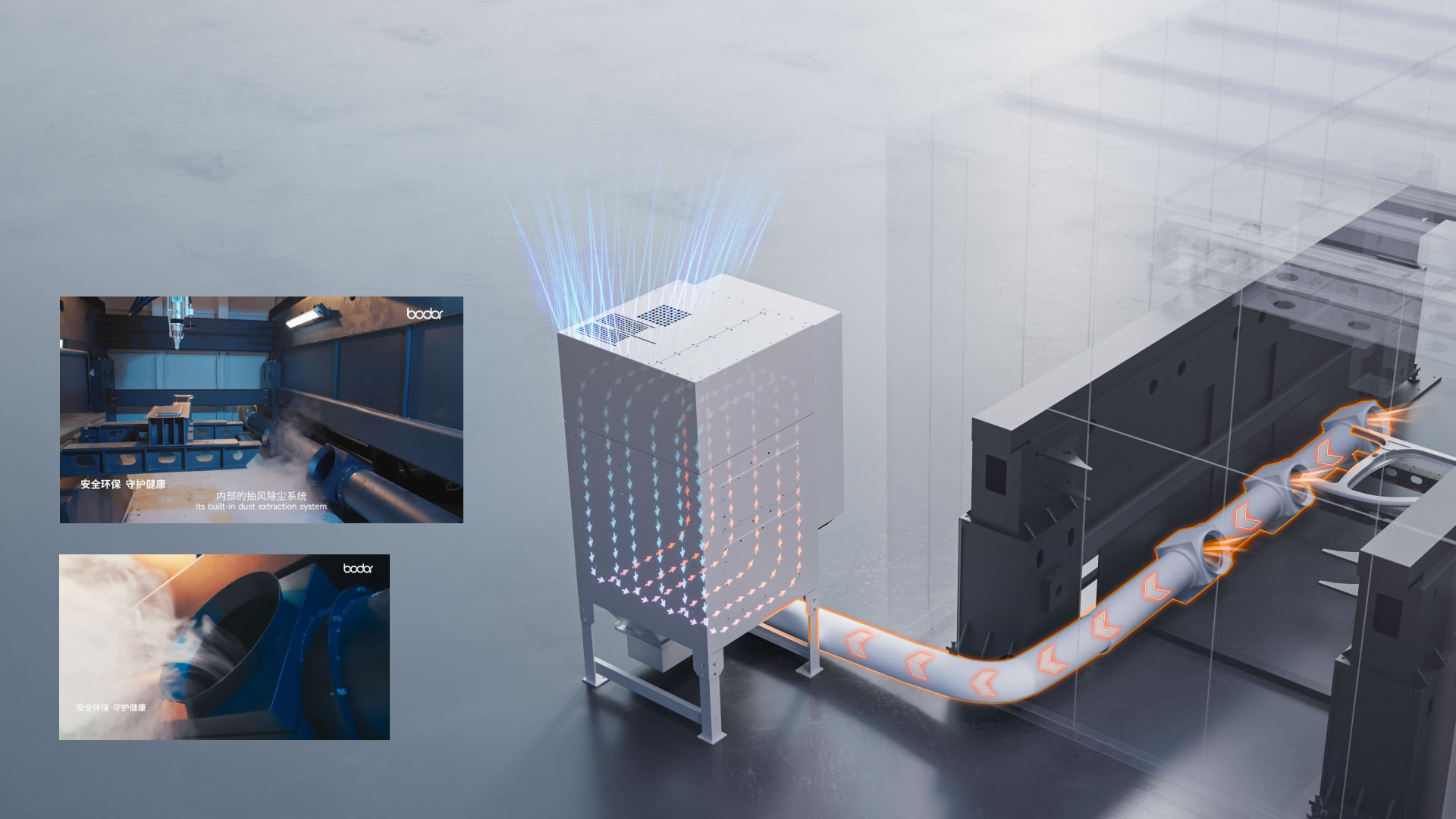
Larger inlets and higher airflow are intended to remove smoke close to the source.
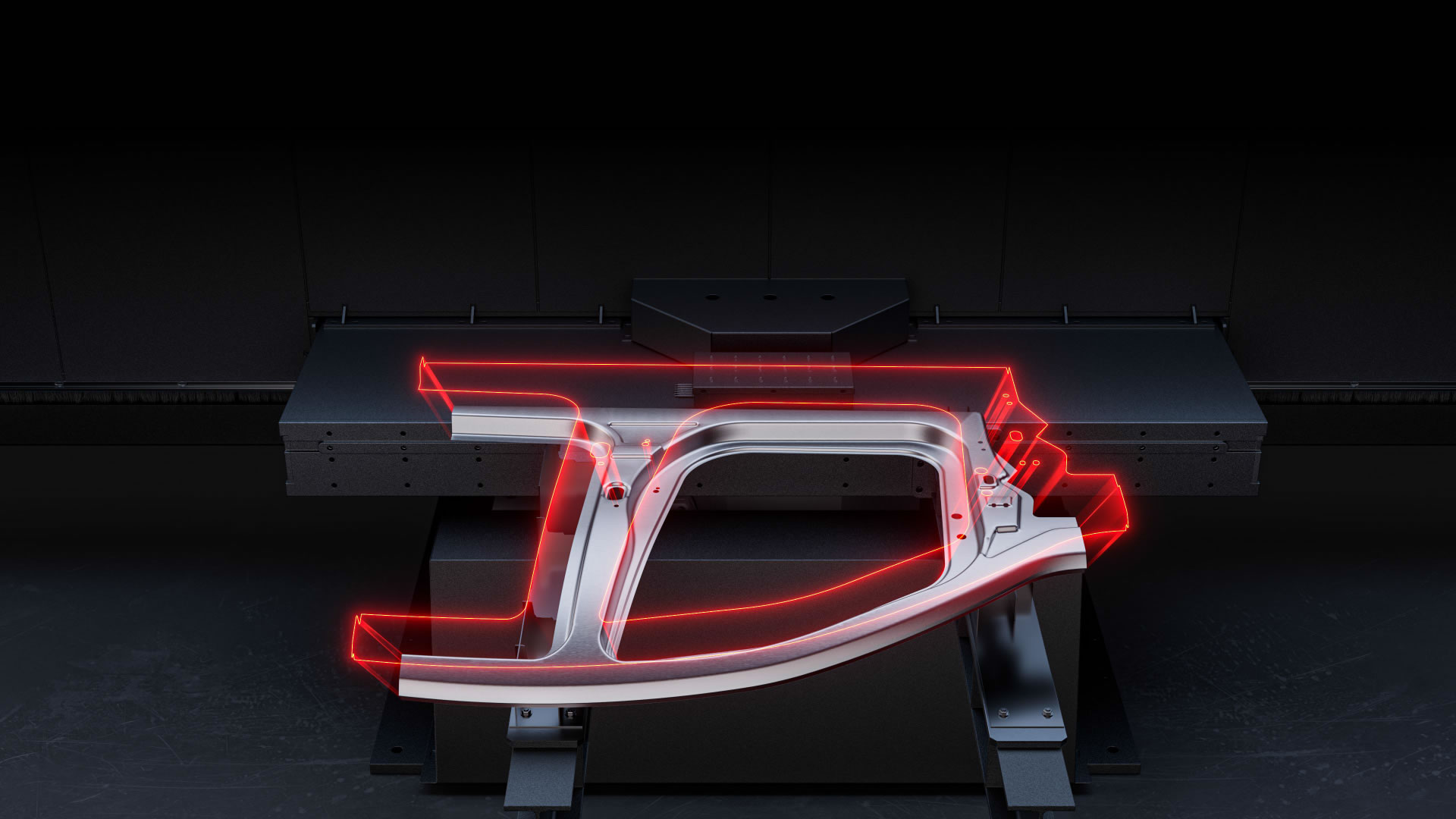
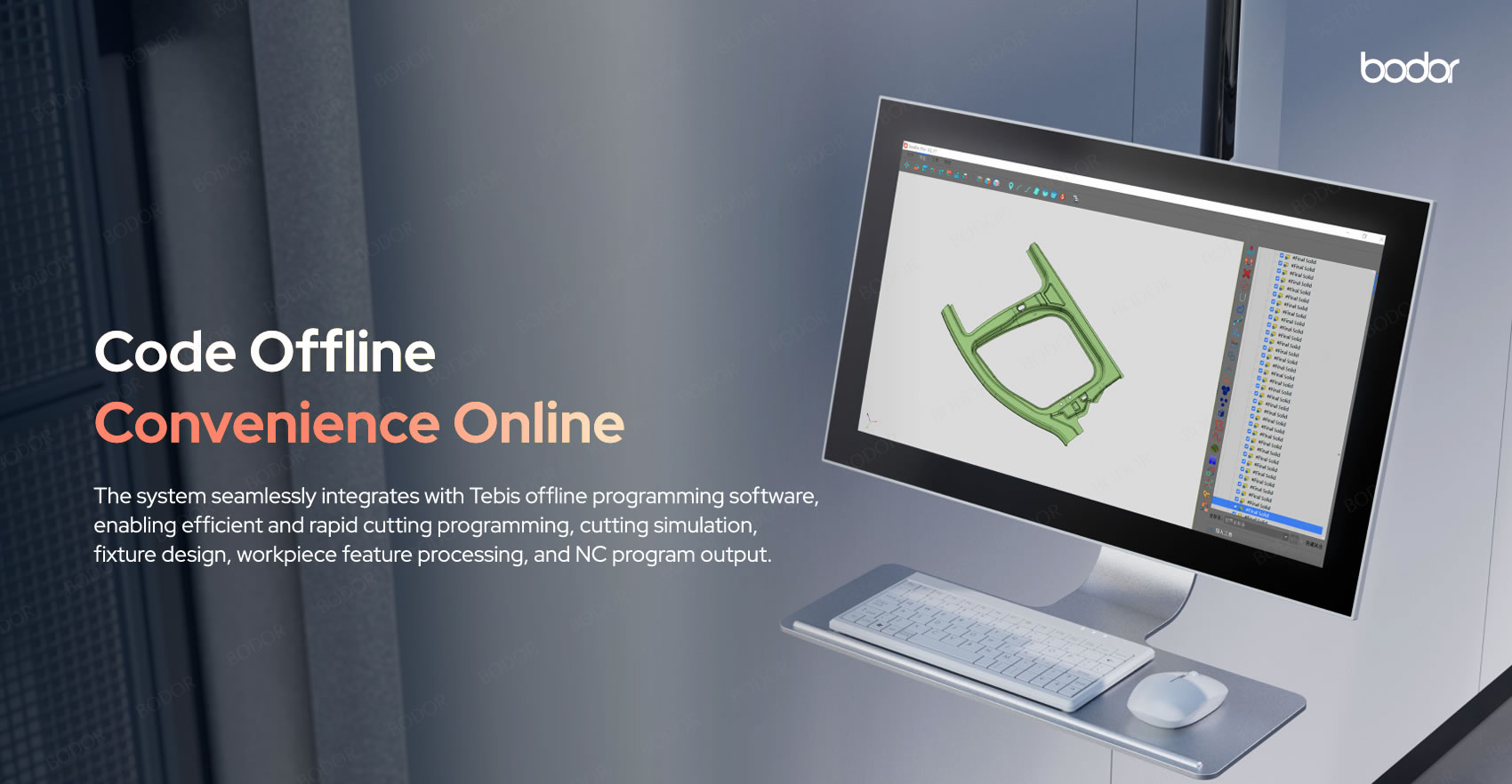
Teach-in programming and manufacturer-described Tebis compatibility support toolpath creation and changeover.
Existing Space Series imagery
Every image detected in the original WordPress and Elementor page is preserved before the redesign is applied. The gallery below can be edited or reordered directly in Elementor.

Typical application areas
Suitability depends on component geometry, material, thickness, fixture design, laser access, tolerance and required cycle time. Representative parts and CAD data should be reviewed before a final specification is issued.
Trim formed panels, body structures, pressings, brackets and prototype or production components with complex edges and apertures.
Process lightweight formed parts and structures where repeatable three-dimensional toolpaths and controlled heat input are important.
Cut openings and profiles in moulded, pressed or fabricated components that cannot be laid flat for conventional sheet processing.
Prepare guards, covers, cabins and formed structural components used in machinery, equipment and fabricated assemblies.
Specify the complete 3D processing cell
A useful Space Series review considers the full component envelope, material, access angles, cut features, fixture repeatability, table loading, programming resources, extraction and site services. World Machinery can use representative drawings and parts to establish the most appropriate next step.
Share CAD data, formed-part dimensions, material grade, thickness range, tolerances and critical cut features.
Review how the component will be located, supported and presented so the head can reach every required cut safely.
Define annual volume, batch size, changeover frequency, target cycle time and the level of operator intervention expected.
Plan floor space, loading routes, extraction, gases, power, compressed air, guarding, offline programming and downstream handling.
World Machinery UK support
A 3D five-axis project depends on the interaction between machine, fixture, software, process and operator. World Machinery can coordinate the UK project from initial part review through commissioning and ongoing support.
Review parts, materials, tolerances, fixtures, access angles and production objectives before the final machine is specified.
Use representative parts or digital models to assess the proposed process, programming route and practical cycle.
Coordinate site preparation, machine delivery, commissioning, safety handover and practical production training.
Discuss preventive maintenance, UK technical support, spare-parts planning and machinery-finance options.
Space Series questions
Final answers depend on the component, fixture, laser source, software, options and site conditions. World Machinery can prepare a current written specification after reviewing the application.
Space is designed for formed and three-dimensional metal components whose cutting path changes across multiple faces, heights or angles. Typical manufacturer-stated application areas include automotive, aerospace, mould making and construction machinery.
Five-axis processing coordinates the cutting head and machine axes so the beam can follow complex three-dimensional contours. The usable angles, access and tolerance depend on the part, fixture and selected machine configuration.
One station can be loaded or unloaded while the other is cutting. Bodor publishes a 2.5-second changeover and u00b115-arcsecond positioning reference, but actual cycle performance depends on the component, fixture and programmed process.
The manufacturer describes an immediate stop intended to protect the head. After the alarm condition has been cleared, the system is designed to return automatically to its previous position in one second.
The existing World Machinery page describes safety light curtains in both directions. Entering the protected area stops the rotary table and the safety state remains active until the zone is clear. Final guarding and risk assessment must match the installed cell.
Bodor describes teach-in programming through a multifunction handheld pendant and also references Tebis offline programming. The final software package, post-processing and training should be confirmed for the quoted UK system.
Yes. Share CAD files, representative parts, materials, thicknesses, tolerances, batch volumes and target cycle times. A fixture and access review is essential before confirming suitability.
World Machinery supports the machinery it supplies with project planning, installation, commissioning, operator training and after-sales support. Confirm the precise scope and service arrangements in the written quotation.
Plan a Space Series application review
Provide the part envelope, material, thickness, required cuts, tolerances, annual volume, target cycle and any existing fixture concept. The team can review the application and recommend a demonstration, trial or current written specification.
Complete the key application details below and the World Machinery team will contact you about the next step.