
One-stop processing
Uncoiling, levelling and cutting are integrated into one coordinated production route instead of being handled as isolated operations.

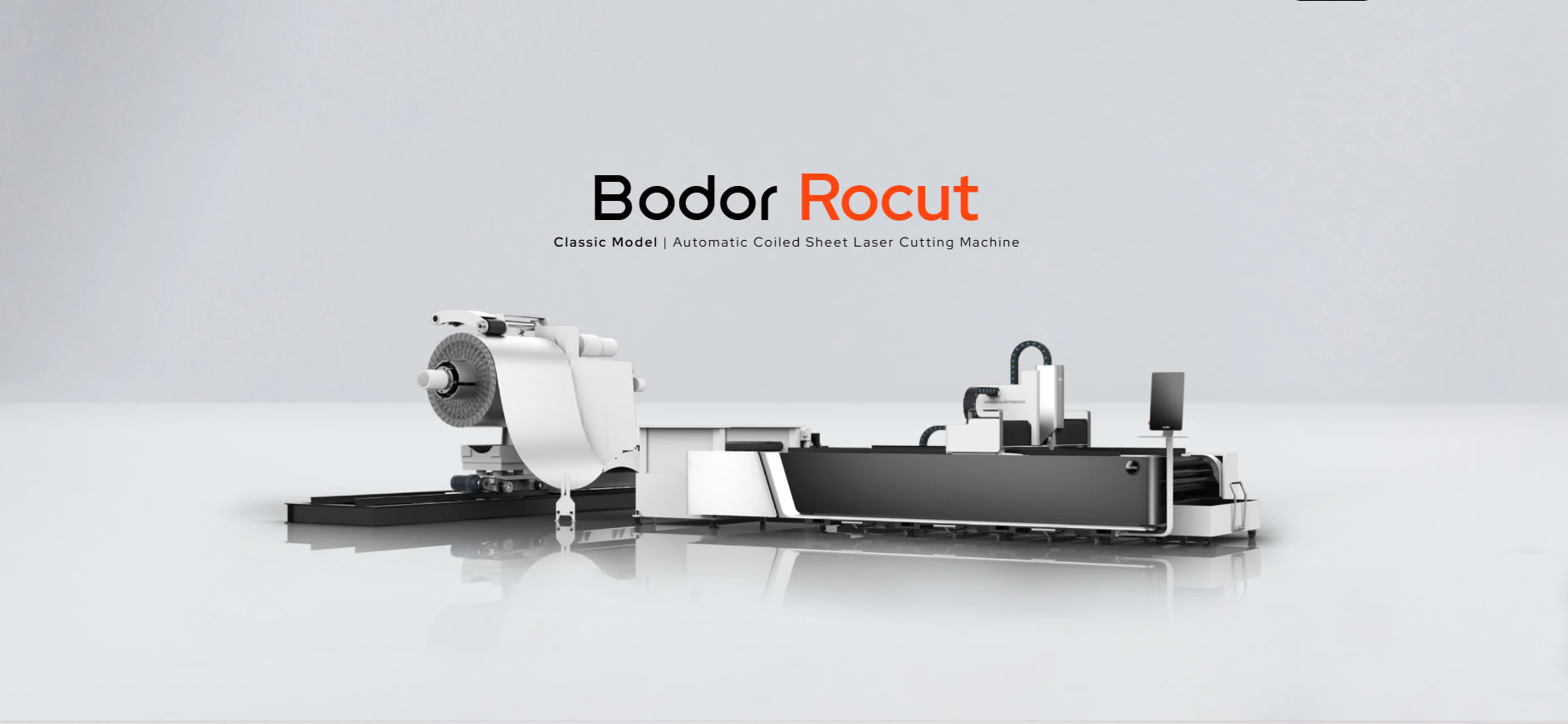
Bodor Rocut Series · Automatic coil laser production line
Turn coil stock into nested, laser-cut parts through one connected production line. Bodor Rocut combines uncoiling, levelling and cutting, while World Machinery supports UK manufacturers with application review, demonstrations, installation, operator training and long-term service.
Coil width, material, thickness, laser power, uncoiler configuration, receiving equipment and production performance depend on the selected system and application. Confirm all details in a current written World Machinery quotation.
One line · lower waste · repeatable cycles
Rocut is intended for manufacturers that repeatedly process coiled sheet and want to connect stock handling, straightening, nesting and laser cutting. The goal is a more direct material route, fewer manual transfers and better use of coil stock across recurring production.
Uncoiling, levelling and cutting are integrated into one coordinated production route instead of being handled as isolated operations.

Continuous nesting is designed to improve coil utilisation, helping reduce remnants and the material cost allocated to each component.

Standardised parameters and one-click cycle starting are intended to reduce repeated manual intervention during recurring work.
Automatic coil processing
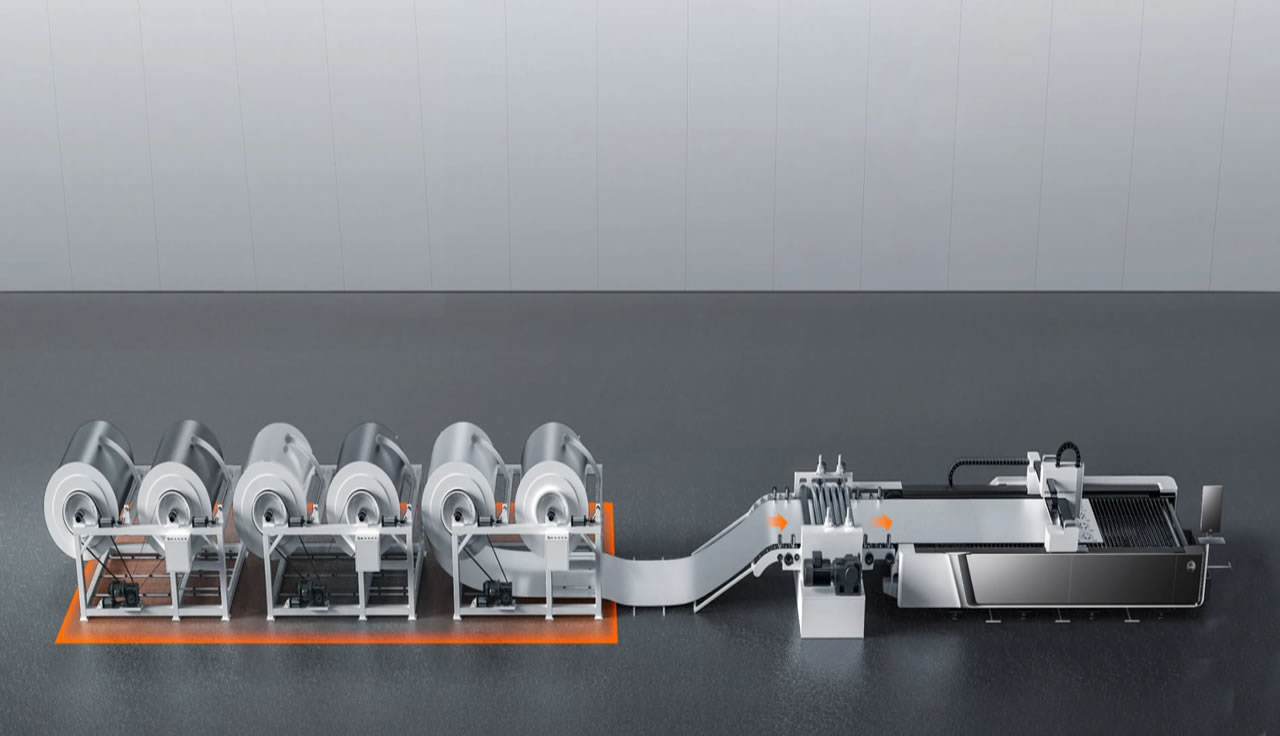
The Rocut line brings together coil selection, feeding, levelling, nesting and laser cutting. A standard dual-station uncoiler can be configured with additional stations, helping operators keep different materials or thicknesses available and reduce changeover disruption.
Select the material and thickness needed for the next production run from the installed uncoiler arrangement.
The coil is unrolled and prepared through the levelling section before it reaches the cutting area.
Parts are arranged along the available strip so production can proceed without conventional sheet loading between nests.
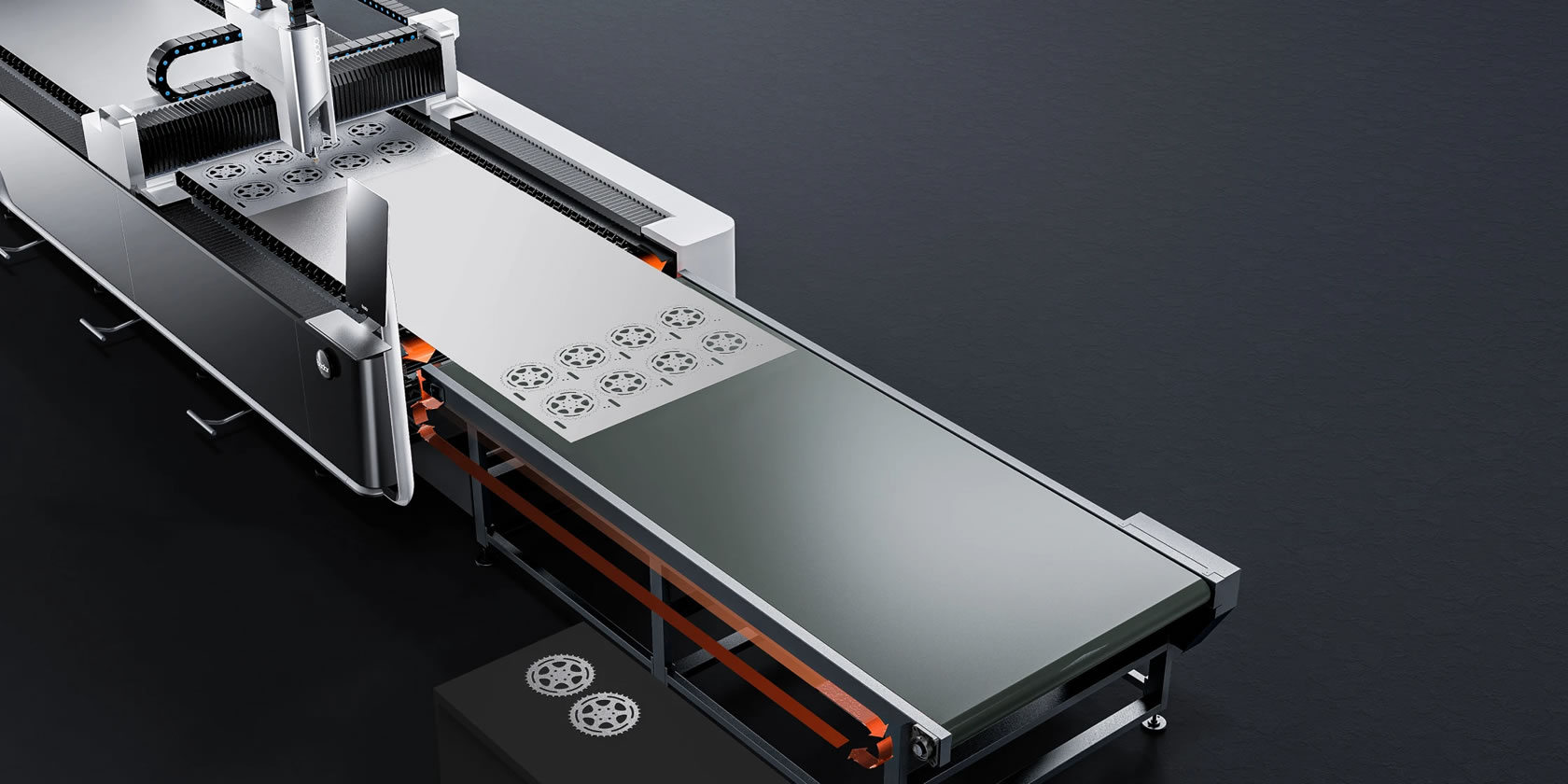
An optional receiving platform can carry finished workpieces away from the cutting area to support sorting and downstream handling.
Integrated coil preparation
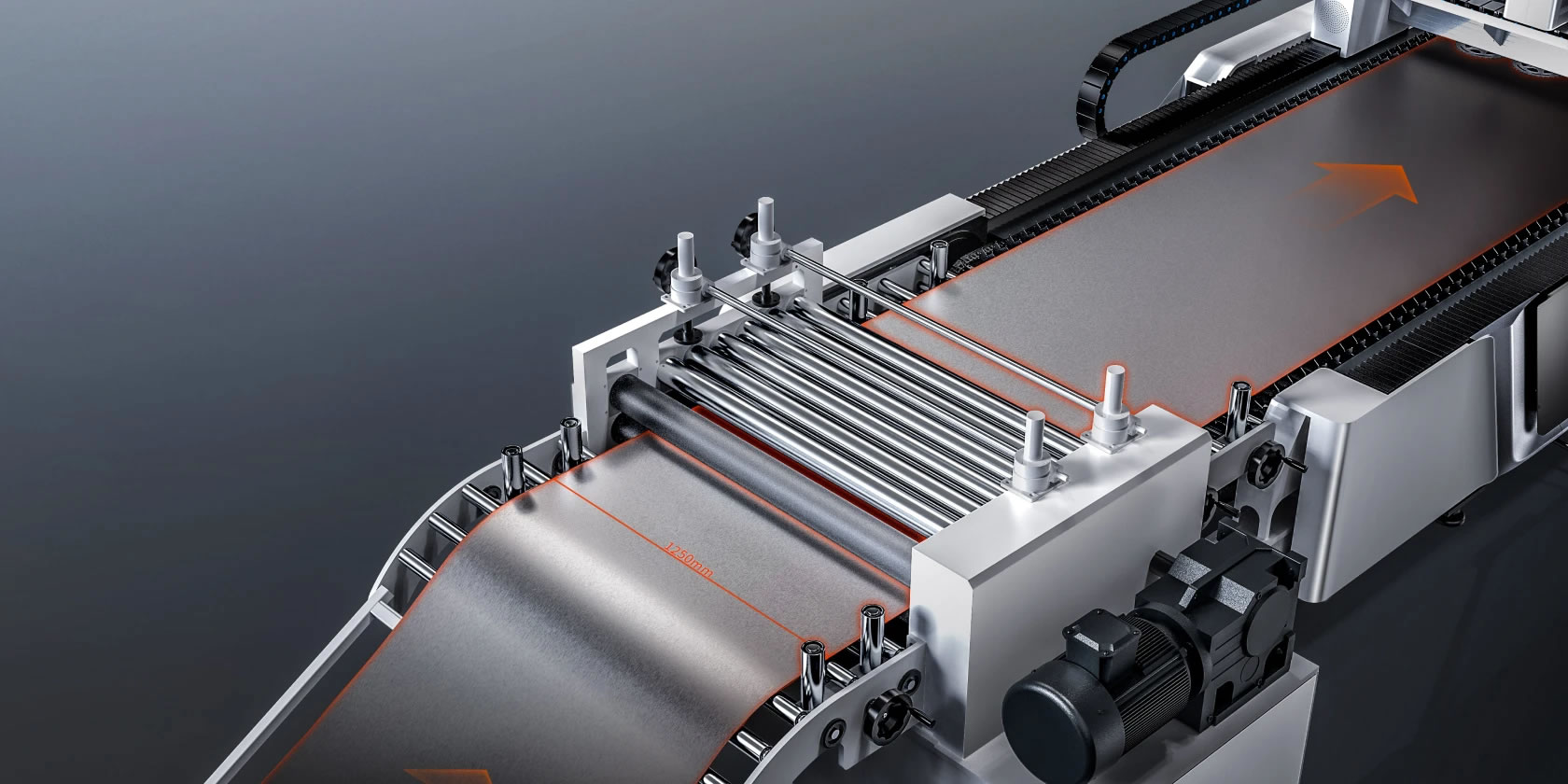
Coil-fed laser production depends on stable material presentation. The integrated levelling section is designed to guide and straighten the strip before it enters the cutting area, supporting a more controlled process and reducing the need for separate off-line preparation.
The coil moves from the uncoiler through preparation and into cutting without separate sheet handling between processes.
Levelling is intended to improve material presentation before the laser head begins the programmed nest.
The final layout must account for coil access, line length, guarding, extraction, finished-part handling and operator routes.

Sheet-edge anti-vibration
Bodor describes a sheet-edge anti-vibration function that adjusts laser-head sensitivity in response to high-frequency movement at the edge of thin material. The aim is to maintain a more stable cutting process as the strip moves through the line.
This is a manufacturer-described function. Availability, material limits and performance depend on the exact Rocut model, software, laser source and process configuration quoted for the UK project.
Production-line functions
The production line can be planned around the materials kept ready at the uncoiler, how the strip is prepared, the cutting process selected and what happens to parts after they leave the cutting area.
Material availability
Bodor describes a standard dual-station uncoiler with up to six optional stations, allowing different materials or thicknesses to remain available for production.
Material preparation
The strip passes through the levelling system before cutting, helping prepare coil stock for a more controlled laser process.
Cut stability
Adaptive laser-head sensitivity is intended to respond to high-frequency movement at the edge of thin coil material.
Material utilisation
Part layouts can be organised along the strip to make more effective use of coil material and reduce avoidable remnants.
 Finished-part flow
The optional receiving platform transports cut parts away from the laser area, supporting sorting and downstream handling.
Recurring production
Standard parameters and a defined cycle are designed to reduce routine operator input during repeat coil-processing work.
Optional laser scanning cutting
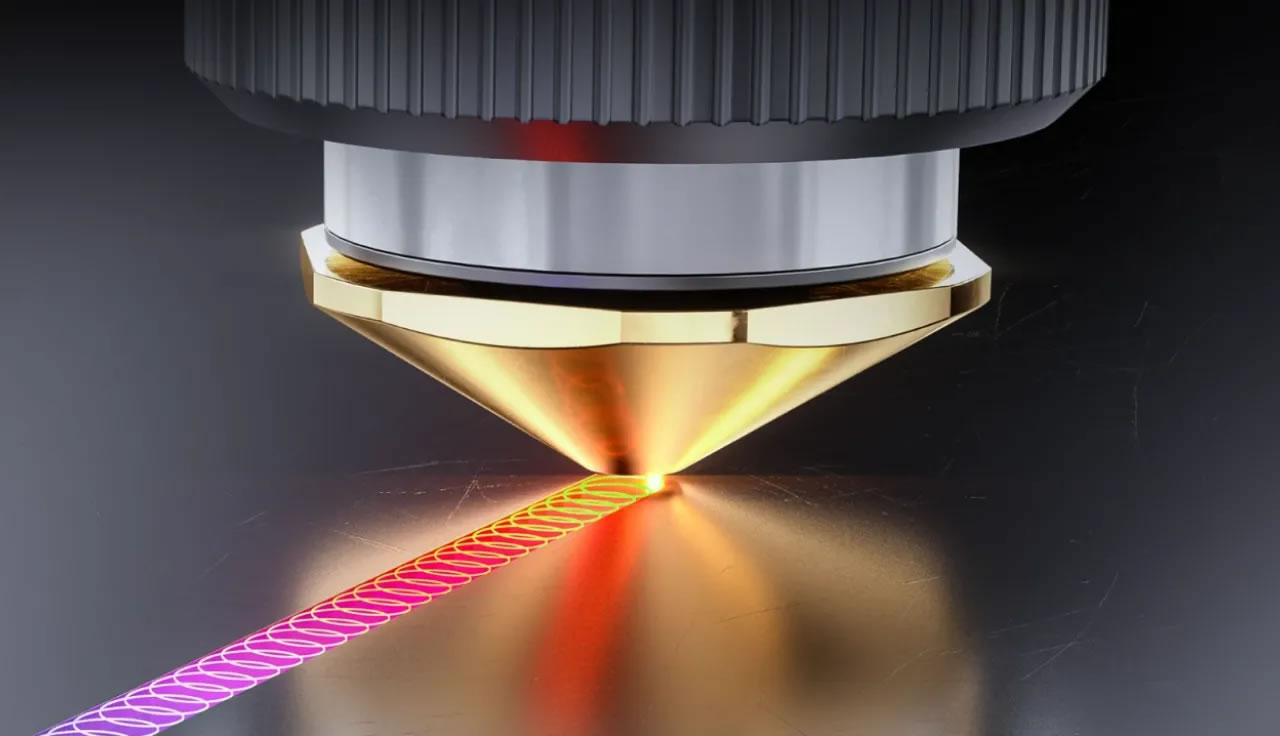
The existing World Machinery page presents laser scanning cutting as an optional process that increases energy interaction within the cutting area compared with a conventional single-path approach. Suitability depends on the selected laser source, software, material, thickness and Rocut configuration.

A conventional cutting path concentrates the beam along one direct travel line.
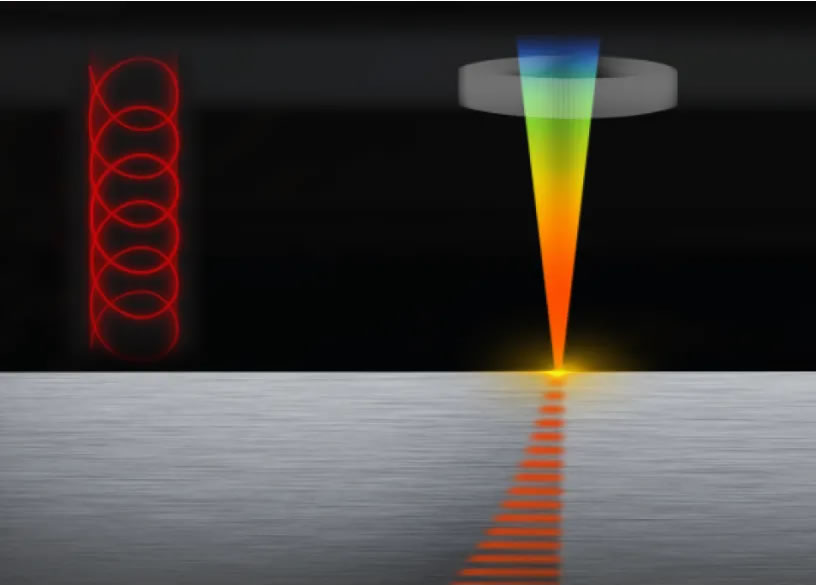
A repeated scanning path increases effective energy interaction within the cutting area.

The existing visual illustrates the repeated beam movement used by the optional scanning process.

The existing Rocut page presents the process as supporting batch cutting of reflective sheet without disruption from back reflection. Confirm material, thickness and source compatibility before specification.
Specify the Rocut line around your coils and output
A useful Rocut specification starts with coil material, width, thickness, mass, annual mix and part output. It must also account for uncoiler stations, line footprint, loading access, extraction, assist gas, receiving equipment, sorting and the factory route around the installed system.
List typical and maximum coil grades, thicknesses, surface conditions and any reflective materials that need to be processed.
Confirm the stock width, coil diameter, coil mass, required cutting width and the line configuration available for the application.
Decide how many materials or thicknesses should remain immediately available and how often production changes between them.
Plan finished-part handling, offcut control, floor loading, access, power, extraction, gases, compressed air and operator movement.
World Machinery UK support
World Machinery can support the Rocut project from representative cutting trials and system specification through factory-layout review, delivery, commissioning, operator training, planned maintenance and future production development.
Review materials, widths, thicknesses, coil weights, part families, nesting requirements and output targets.
Evaluate representative material, cutting quality, cycle flow and the practical implications of coil-fed production.
Coordinate site preparation, delivery, commissioning, line handover and practical operator training.
Discuss planned maintenance, UK technical support and machinery-finance options for the complete project.
Rocut questions
Final answers depend on the selected line width, coil specification, laser source, uncoiling arrangement, optional equipment and site conditions. World Machinery can prepare a current written configuration for the project.
Rocut is a steel-coil laser production line that combines uncoiling, levelling and laser cutting. It is intended for manufacturers that repeatedly process coiled sheet and want a more continuous route from stock to nested parts.
The line integrates uncoiling and levelling ahead of the cutting area. The exact equipment, capacity and preparation performance depend on the coil specification and system selected, so these must be confirmed in the written quotation.
Bodor describes a standard dual-station uncoiler and up to six optional stations. The final number, coil capacity and changeover arrangement depend on the selected Rocut configuration and available factory space.
Parts are nested along the continuous strip rather than being restricted to individual stock sheets. A well-planned nest can improve coil utilisation and reduce the remnants allocated to each production batch.
Bodor describes an algorithm that adjusts laser-head sensitivity to help respond to high-frequency movement at the edge of thin sheet. Availability and performance should be confirmed for the exact machine, material and software package.
The existing World Machinery page presents laser scanning cutting as optional. Suitability and availability depend on the laser source, software, material, thickness and process package being quoted.
Bodor lists an optional workpiece receiving platform that transports cut parts to support sorting. The required platform length, payload and downstream handling arrangement should be planned as part of the complete line.
World Machinery can review coil data, material samples, drawings, nesting requirements, batch volumes and site information. Representative trials and a layout review are the best way to confirm suitability before final specification.
Plan your Rocut production line
Send your coil materials, widths, thicknesses, weights, part drawings, target output and factory-layout information. The World Machinery team can review the complete Rocut configuration and prepare current written figures.
Provide the basic application and line information below and the World Machinery team will contact you about the next step.