
All Electric Press Brakes Machines
GH3613FES
GH4020FES
GH6020FES
GH8025FES
GH1032FES
All Electric Press Brake Machines refer to a class of sheet metal bending machines that are fully powered by electric motors rather than hydraulic systems. These machines are known for their precision, energy efficiency, lower maintenance, and cleaner operation
Key Features of All-Electric Press Brakes:
Servo-Electric Drive System:
- Uses electric servo motors instead of hydraulic pumps and fluids.
- Offers fast and accurate positioning of the ram (top beam).
Energy Efficiency:
- Power is only consumed during active bending, not at idle.
- Typically 40–70% more efficient than hydraulic counterparts.
High Precision and Repeatability:
- Ideal for industries requiring tight tolerances (e.g., electronics, aerospace).
- CNC controls with back gauges ensure consistent bends.
Low Maintenance:
- No hydraulic oil, filters, or pumps.
- Fewer components subject to wear and leak.
Environmentally Friendly:
- Quiet operation and no risk of oil spills.
- Meets stricter environmental standards.
Compact Design:
- Typically smaller footprint due to the lack of hydraulic systems.
Ideal Applications:
- High-volume, high-precision production
- Clean-room manufacturing
- Small to mid-sized parts
All electric Press Brake Machines


What is a electric Press Brake Used For?
The principal purpose of a CNC press brake machine is to bend/form sheet metal. They produce specified bends by clamping the sheet metal between the required punch and die.
Press braking is used when a dimension needs to be added to a flat sheet metal surface. It applies to various businesses and sectors, notably architectural design, building, engineering, and transportation.
Because of its adaptability, it has the potential to form operations that demand profiles for smaller pieces than usual and may not be comparable.
CNC sheet metal press brakes typically create parts for HVAC (heating, ventilation, or air conditioning) systems and construction components. With the correct equipment, we may use the machines more diversely and creatively for particular purposes.
How Does An Electric Press Brake Work?
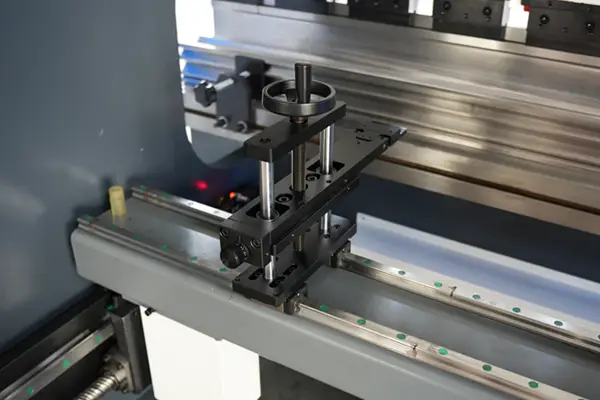
Electric press brakes, also known as E-brakes, electrical press brakes, or electronic press brakes, employ servo-electronic high-quality and high-speed bending technology. They have a complete electric motor and a rear gauge with a full operating length. There is no hazardous hydraulic oil, low CO2 emissions, and noiseless operation.
The essential characteristic of all electric press brakes is that they do not use hydraulic pressure to bend metal but instead rely entirely on a motor-driven bending mechanism. All electrical CNC bending machines are designed and built with great bending precision, efficiency, and dependability in mind.
The electric drive is more responsive than the hydraulic drive. As a result, the electric bender’s sliders move quickly. You may adjust the bending speed for varied thicknesses, materials, and lengths to increase accuracy and assure high output.

What is CNC Bending, and How Does It Work?
Computer numerically controlled (CNC) bending is a manufacturing technique performed by CNC press brakes. It allows the bending of sheet metal work from a few millimetres across to portions many metres long on larger industrial machinery.
CNC press brakes feature either a fixed bottom bed with the V block tooling fastened in place or a top beam that travels under force with the V blade tools, a process known as down forming.
An up-forming machine is an inverse, with the bottom bend moving and the top beam immovable. Both process methods will provide identical sheet metal components, and the design of your component to fit either machine is not constrained.
Choosing the Right electric Press Brake For You
With so many CNC press brake suppliers, models, sizes, and choices available, selecting the correct press brake for your business may be challenging. Before shopping, it is vital to have a basic grasp of these machines and their characteristics. Before you begin your search, you must define the most vital aspects of your requirements.
Before selecting a press brake, you must choose the metal you intend to bend (stainless steel, 16 gauge mild steel, etc.).
Then, you must define the specific features to be considered when calculating the part bend. This includes the following
Tensile strength
The metal’s thickness and length
The CNC press brake folding or bending length
The length of the V
The inner radius of the components
Once these properties have been identified, the tonnage necessary for the bending process must be calculated.
The tonnage is the pressing force of the press brake. It specifies the pressure that the punch may apply during the bending action.
High tonnage enables the bending of thick and hard metals.
Low tonnage is appropriate for thin metals.

Why Choose World MC?
Flexible Payment Options
Machine Relocation Option
CNC Router Installation and Training
Delivery and Installation All Over the UK
UK Support and Customer Service
Over 50 Years of Experience
Cutting Solutions Latest Technology
Have an Enquiry?
If you’re not sure what type of electric press brake is suitable for you. Contat our expert team today at World Machinery. Our friendly team will make sure to guide and provide a clear and honest advice.